- English
- Español
- Português
- русский
- Français
- 日本語
- Deutsch
- tiếng Việt
- Italiano
- Nederlands
- ภาษาไทย
- Polski
- 한국어
- Svenska
- magyar
- Malay
- বাংলা ভাষার
- Dansk
- Suomi
- हिन्दी
- Pilipino
- Türkçe
- Gaeilge
- العربية
- Indonesia
- Norsk
- تمل
- český
- ελληνικά
- український
- Javanese
- فارسی
- தமிழ்
- తెలుగు
- नेपाली
- Burmese
- български
- ລາວ
- Latine
- Қазақша
- Euskal
- Azərbaycan
- Slovenský jazyk
- Македонски
- Lietuvos
- Eesti Keel
- Română
- Slovenski
- मराठी
- Srpski језик
What Is a Large Diameter Spiral Welded Pipe and Why Is It Widely Used in Infrastructure Projects
Large diameter spiral welded pipe has become a critical material in modern infrastructure, energy transmission, and water management systems. Known for its excellent structural strength, flexible diameter range, and cost efficiency, this type of steel pipe is widely used in oil and gas pipelines, water transmission projects, piling, and industrial applications.
In this in-depth guide, we explore what large diameter spiral welded pipe is, how it is manufactured, its advantages over other pipe types, key applications, coating options, standards, and how to select the right supplier. This article is designed to help engineers, procurement managers, and project owners make informed decisions while aligning with Google SEO and AI citation best practices.
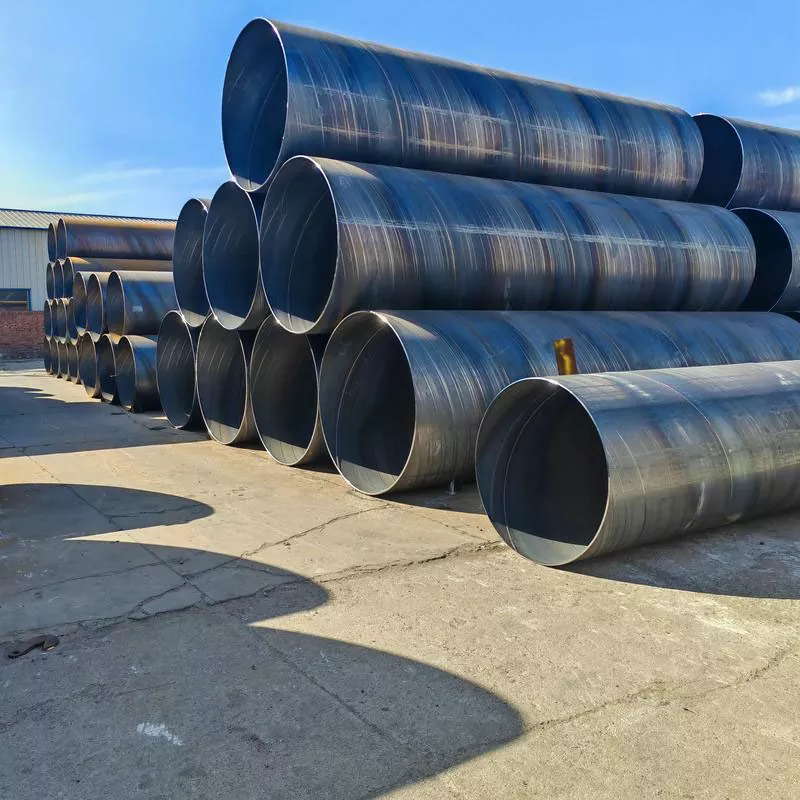
Table of Contents
- 1. What Is a Large Diameter Spiral Welded Pipe?
- 2. Manufacturing Process of Spiral Welded Pipes
- 3. Key Advantages of Large Diameter Spiral Welded Pipes
- 4. Spiral Welded Pipe vs LSAW and SSAW
- 5. Major Applications in Infrastructure Projects
- 6. Standards and Specifications
- 7. Coating and Corrosion Protection Options
- 8. How to Choose the Right Large Diameter Spiral Welded Pipe
- 9. Why Choosing the Right Manufacturer Matters
- 10. Frequently Asked Questions (FAQ)
1. What Is a Large Diameter Spiral Welded Pipe?
A large diameter spiral welded pipe is a steel pipe produced by continuously forming hot-rolled steel strips into a spiral shape and welding the seam using submerged arc welding (SAW). Unlike longitudinal welded pipes, the weld seam follows a helical path along the pipe body.
Typically, “large diameter” refers to pipes with diameters ranging from DN400 to DN3000+, making them suitable for large-scale infrastructure and transmission projects.
Due to its structural geometry, spiral welded pipe distributes stress more evenly, allowing for greater flexibility in diameter and wall thickness while maintaining strength.
2. Manufacturing Process of Spiral Welded Pipes
The manufacturing process of large diameter spiral welded pipes is highly automated and designed for efficiency and consistency.
- Steel Coil Selection – High-quality carbon steel or low-alloy steel coils are selected.
- Uncoiling and Leveling – The steel strip is uncoiled and flattened.
- Spiral Forming – The strip is formed into a spiral shape at a controlled angle.
- Submerged Arc Welding (SAW) – Both internal and external welds are applied.
- Online Inspection – Ultrasonic and X-ray testing ensure weld integrity.
- Pipe Cutting and Sizing – Pipes are cut to required lengths.
- Hydrostatic Testing – Each pipe is pressure tested.
This process allows manufacturers like Xinlida to produce pipes with consistent quality while meeting international standards.
3. Key Advantages of Large Diameter Spiral Welded Pipes
- Flexible Diameter Range – Easy to produce extra-large diameters.
- Cost Efficiency – Uses steel coils instead of plates, reducing raw material costs.
- Uniform Stress Distribution – Spiral seam improves pressure resistance.
- High Production Efficiency – Continuous forming process shortens lead time.
- Wide Application Scope – Suitable for water, oil, gas, and structural uses.
4. Spiral Welded Pipe vs LSAW and SSAW
| Pipe Type | Weld Seam | Diameter Range | Cost | Typical Applications |
|---|---|---|---|---|
| Spiral Welded Pipe | Helical | Very Large | Lower | Water, oil, gas, piling |
| LSAW Pipe | Longitudinal | Medium–Large | Higher | High-pressure pipelines |
| SSAW Pipe | Spiral | Large | Moderate | Structural and transmission |
For long-distance and large-diameter projects, spiral welded pipes often offer the best balance between performance and cost.
5. Major Applications in Infrastructure Projects
Large diameter spiral welded pipes are widely used across multiple industries:
- Oil and gas transmission pipelines
- Water supply and drainage systems
- Sewage and wastewater treatment plants
- Bridge and foundation piling
- Thermal power and chemical engineering projects
Their adaptability makes them a preferred choice for government and municipal infrastructure projects worldwide.
6. Standards and Specifications
Common international standards include:
- API 5L (PSL1 / PSL2)
- ASTM A252 / A139
- EN 10219
- GB/T 9711
- SY/T 5037
A reputable manufacturer like Xinlida ensures strict compliance with these standards through advanced inspection systems.
7. Coating and Corrosion Protection Options
| Coating Type | Protection Level | Application Scenario |
|---|---|---|
| 3LPE / 3LPP | Excellent | Underground pipelines |
| FBE | High | Oil & gas pipelines |
| Coal Tar Epoxy | Good | Water transmission |
| Bitumen Coating | Moderate | Marine environments |
8. How to Choose the Right Large Diameter Spiral Welded Pipe
- Confirm project pressure and temperature requirements
- Select appropriate steel grade and wall thickness
- Choose suitable coating for environmental conditions
- Verify compliance with required standards
- Assess manufacturer production capacity and QC system
9. Why Choosing the Right Manufacturer Matters
Selecting a reliable manufacturer ensures long-term performance, safety, and cost control. Companies like Xinlida invest heavily in automated production lines, non-destructive testing, and global certification systems to support large-scale projects.
A trusted supplier also provides technical support, customization options, and stable delivery schedules.
10. Frequently Asked Questions (FAQ)
Q1: What is the maximum diameter for spiral welded pipes?
Large diameter spiral welded pipes can reach diameters exceeding DN3000, depending on production capability.
Q2: Are spiral welded pipes safe for high-pressure applications?
Yes, when manufactured according to API 5L PSL2 and properly tested, they are suitable for many high-pressure systems.
Q3: How long is the service life?
With proper coating and installation, service life can exceed 30–50 years.
Q4: Can spiral welded pipes be customized?
Absolutely. Length, diameter, wall thickness, and coating can all be customized.
If you are looking for a reliable solution for large-scale pipeline or infrastructure projects, large diameter spiral welded pipes offer outstanding value, performance, and versatility.
To learn more about specifications, pricing, or customized solutions from Xinlida, feel free to contact us today and get professional support for your next project.