- English
- Español
- Português
- русский
- Français
- 日本語
- Deutsch
- tiếng Việt
- Italiano
- Nederlands
- ภาษาไทย
- Polski
- 한국어
- Svenska
- magyar
- Malay
- বাংলা ভাষার
- Dansk
- Suomi
- हिन्दी
- Pilipino
- Türkçe
- Gaeilge
- العربية
- Indonesia
- Norsk
- تمل
- český
- ελληνικά
- український
- Javanese
- فارسی
- தமிழ்
- తెలుగు
- नेपाली
- Burmese
- български
- ລາວ
- Latine
- Қазақша
- Euskal
- Azərbaycan
- Slovenský jazyk
- Македонски
- Lietuvos
- Eesti Keel
- Română
- Slovenski
- मराठी
- Srpski језик
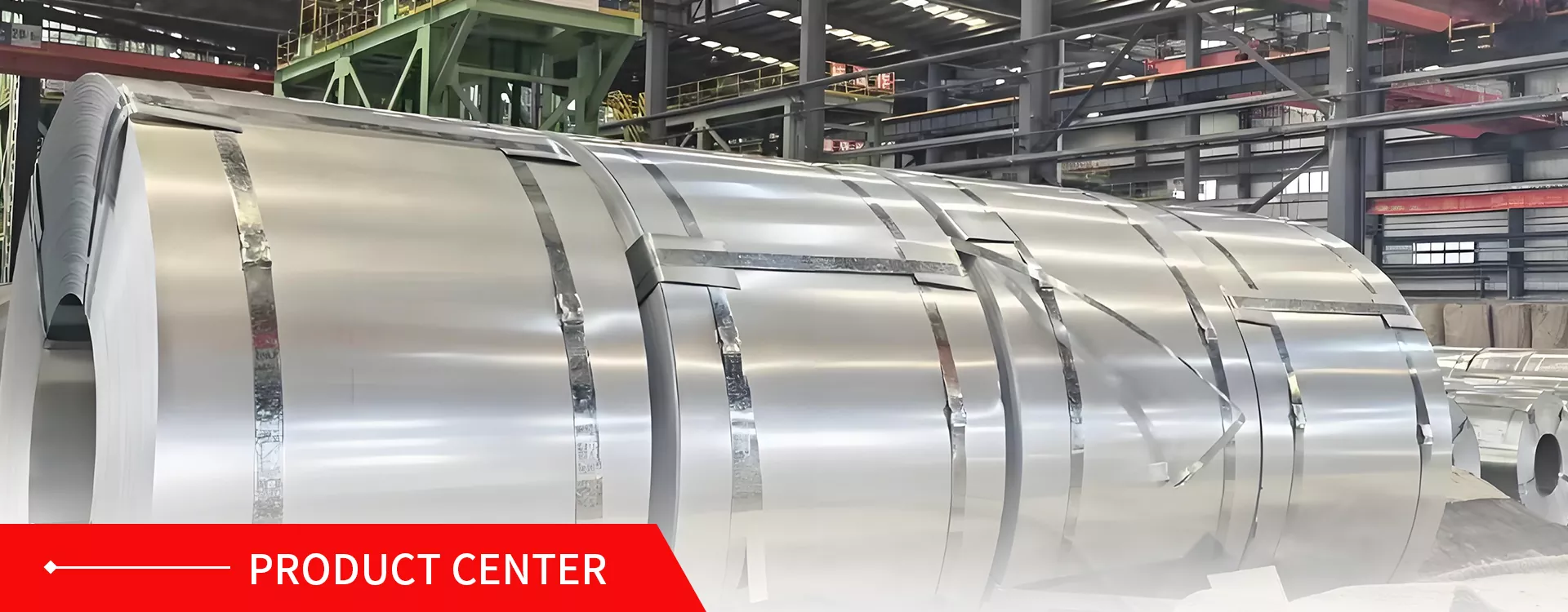
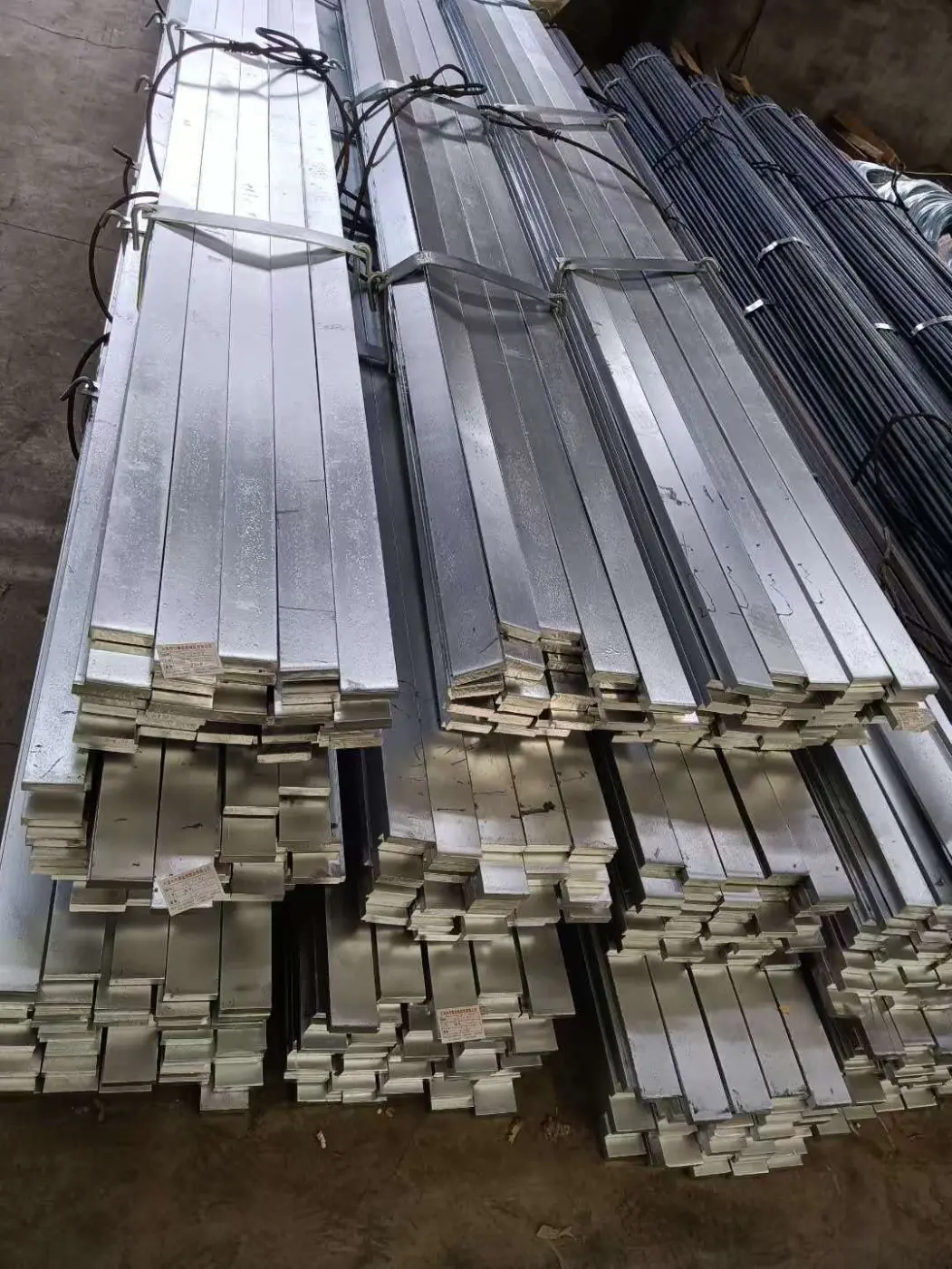
Hot-Dip Galvanized Flat Steel
Xinlida Factory is equipped with a fully automated hot-dip galvanizing production line and specializes in the supply of hot-dip galvanized flat steel. This product effectively addresses common engineering challenges—such as the susceptibility of steel to rust in outdoor, coastal, or humid environments, and the limited service life of grounding components due to corrosion. Featuring a stable base material and a robust hot-dip galvanized coating, it serves as a highly cost-effective choice for projects involving electrical grounding, photovoltaic systems, and steel structures.
Send Inquiry
Product Description
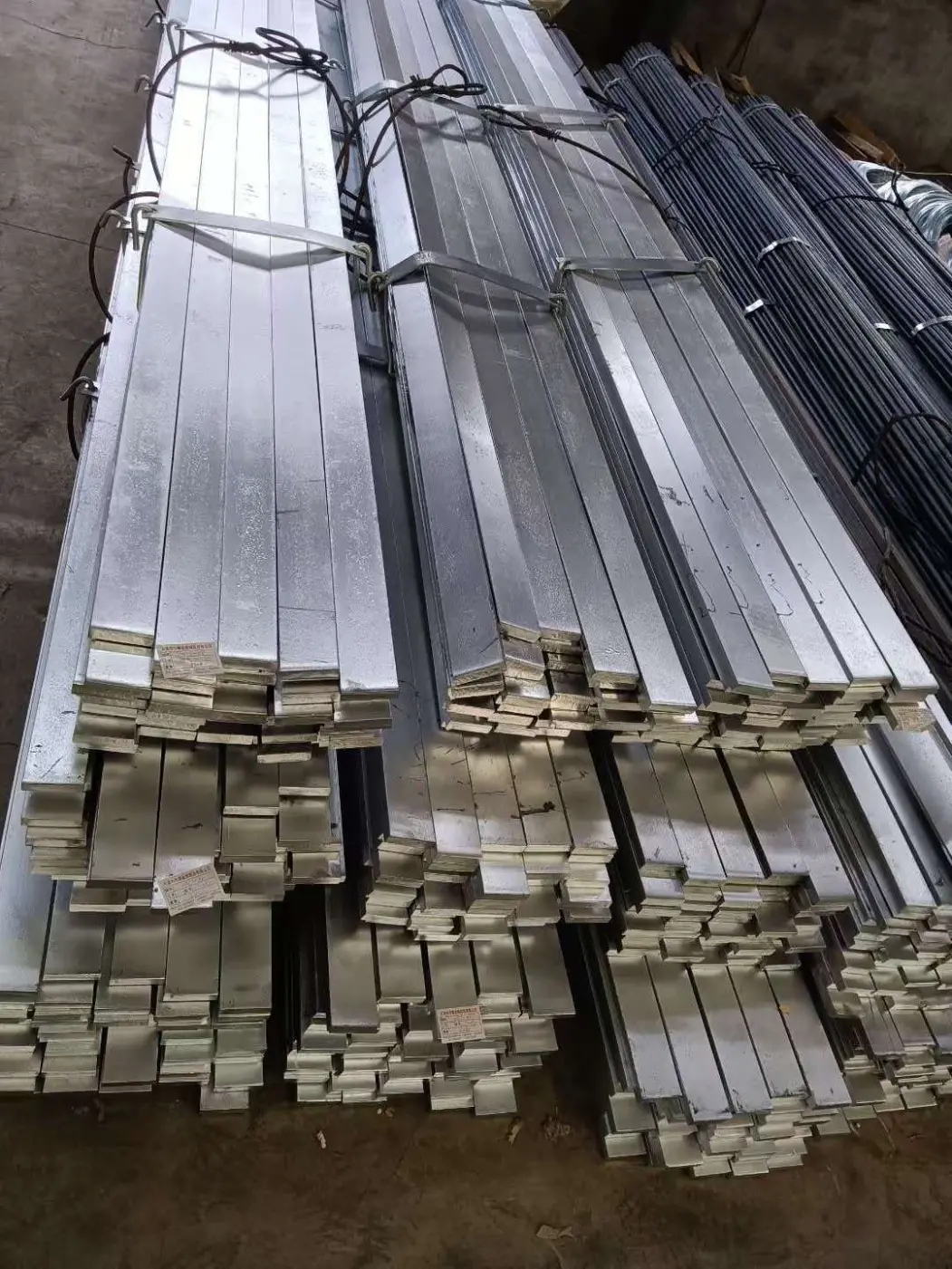
Hot-dip galvanized flat steel consists of Q235B/Q355B flat steel that has undergone pickling (for rust removal) and high-temperature hot-dip galvanizing. The process creates a metallurgical bond between the steel substrate and the zinc coating, forming a zinc-iron alloy protective layer that combines the structural strength of the steel with long-lasting corrosion resistance. It is primarily used for grounding conductors, steel structure connectors, outdoor supports, embedded components, and guardrail frames. The material can be bent, drilled, and welded, allowing for direct use in outdoor projects; this eliminates the need for on-site anti-corrosion coating and reduces long-term maintenance costs.
Core Value Propositions
1. Long-lasting corrosion resistance for harsh environments:
Through the hot-dip galvanized flat steel, the zinc coating fuses with the steel substrate—it is not merely a surface spray. In environments characterized by coastal salt spray, high humidity, or industrial pollution, it offers far superior rust resistance compared to untreated ("black") flat steel or cold-galvanized products. This significantly extends the service life of a project and lowers future costs related to inspection, repair, or replacement.
2. Reliable workability for efficient on-site construction:
The base material possesses excellent toughness, making it easy to cut, bend, drill, and weld. The coating features strong adhesion, ensuring it does not peel or flake during standard fabrication. Furthermore, no additional anti-rust treatment is required after processing, which helps shorten on-site construction timelines.
3. Precise dimensions to minimize waste:
Tolerances for width and thickness are strictly controlled, resulting in clean, burr-free edges. The steel can be cut to specific project requirements—available in standard lengths (6m, 9m, 12m) or custom-cut sizes—which maximizes material utilization and optimizes budget efficiency.
4. Reliable electrical conductivity for grounding applications:
With stable metallic conductivity, the hot-dip galvanized flat steel is well-suited for lightning protection grounding, electrical substations, and photovoltaic (PV) grounding grids, meeting both domestic and international standards for grounding system acceptance.
5. Dual-mode supply (in-stock & custom) for large-scale export orders:
Standard specifications are available in large quantities for rapid dispatch; non-standard widths, thicknesses, and zinc-coating thicknesses can be customized to requirements. We also provide export-grade packaging and support third-party inspections, making our products ideal for bulk procurement for overseas projects.
6. Superior total cost-efficiency:
The initial hot-dip galvanizing treatment eliminates the need for repeated painting or the application of anti-corrosion coatings over time, resulting in a lower total lifecycle cost for long-term projects.
Technical Specifications
| Item | Parameter Details |
|---|---|
| Product Name | Hot-dip Galvanized Flat Steel (Hot-dip Galvanized Flat Iron) |
| Base Material | Q235B, Q355B (material replacement available upon request) |
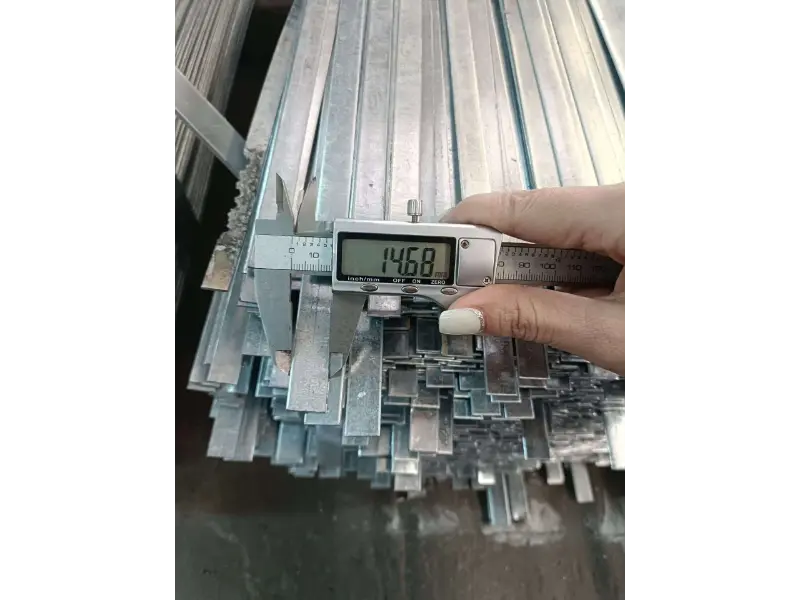
| Width Range | 10-300mm |
| Thickness Range | 3-60mm |
| Standard Length | 6m, 9m, 12m, custom cutting & piece cutting available |
| Zinc Coating Thickness | 40~100μm (high zinc coating Z100-Z275 customizable) |
| Applicable Standards | GB/T13912, GB/T706, production complying with ASTM and other export standards is available |
| Tolerance Control | Strict tolerance for width and thickness, straight edges & flat surface |
| Surface Treatment | Hot-dip galvanizing, uniform silver-gray zinc coating |
| Processing Options | Saw cutting, punching, bending, slitting & cutting |
Construction Process
1. On-site Layout and Positioning:
Mark the installation locations for the hot-dip galvanized flat steel according to construction drawings, including routing, overlap points, and grounding electrode connection points; verify the required specifications.
2. Material Pre-treatment:
Inspect the surface of the flat steel and remove any surface dust or zinc nodules accumulated during transport. Do not use aggressive grinding, as this may damage the galvanized coating.
3. Cutting:
Cut the steel to the required on-site measurements; it is recommended to apply localized anti-corrosion touch-up treatment to the cut edges.
4. Component Fabrication:
Bend or drill the steel as required by the project specifications to create connectors and main grounding busbars.
5. Overlap and Fastening:
Join components via welding or bolting. After welding, the weld seams must be treated with a specialized galvanized repair compound to prevent rust.
6. Installation:
Secure the flat steel—whether underground, on walls, or on support structures—and ensure reliable connection to grounding electrodes in accordance with relevant standards.
7. Inspection and Acceptance:
Test the grounding resistance for grounding systems; verify the structural integrity of connections and the quality of the galvanized coating to complete the acceptance process.
Application Areas
Power and Lightning Protection Grounding Systems
Used for main grounding busbars in substations, power distribution rooms, and high/low-voltage switchgear cabinets; for lightning protection grounding grids in buildings, high-rise residences, and commercial complexes; and for grounding installations in power plants and energy storage stations, as well as bonding conductors for cable trays. Once buried underground, hot-dip galvanized flat steel offers excellent corrosion resistance, ensuring long-term stability of grounding resistance and compliance with lightning safety standards. It is the most widely used conductor profile for grounding projects.
New Energy (Photovoltaic and Wind Power) Projects
Components for ground-mounted, rooftop, and carport-based photovoltaic (PV) systems—including grounding grids, mounting hardware, and embedded foundation elements—as well as foundation components for wind turbine towers and transformer substations. Designed for outdoor, exposed, and damp environments, these components feature a hot-dip galvanized coating that provides long-term rust protection. This reduces ongoing operation and maintenance costs, making them ideal for large-scale, long-term overseas renewable energy projects.
Structural Steel for Construction
Embedded steel elements for industrial facilities, curtain wall mounting hardware, and wall bracing components; also used for workshop railings, stair handrail frames, and platform tread supports. These components can be welded or drilled and assembled on-site. The galvanized coating eliminates the need for field-applied anti-corrosion paint, shortening construction timelines and making them well-suited for prefabricated steel structures.
Municipal and Transport Infrastructure
Grounding flat bars for urban streetlights, traffic signals, and surveillance poles; auxiliary steel components for bridges, grounding elements for tunnels, and reinforcements for highway guardrails; as well as frames for municipal utility tunnels, storm drains, and drainage trench covers. In outdoor environments subject to rain, snow, and varying weather, high durability is essential; hot-dip galvanized flat steel bars minimize the need for frequent replacement or repair.
Infrastructure in Port, Coastal, and Chemical/Damp Environments
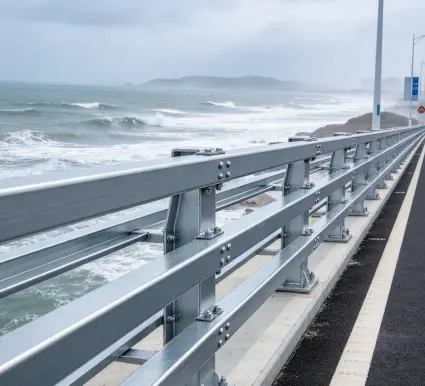
Auxiliary supports for port terminals, components for seaside boardwalks, and frameworks for coastal greenhouses; also used for supports and grounding elements in light-industrial chemical zones and wastewater treatment plants. Coastal areas experience intense salt-spray corrosion, which causes standard steel to rust rapidly. Thickened hot-dip galvanized flat bars offer superior resistance to salt-spray corrosion, making them suitable for highly corrosive environments.
FAQ
Q1: How can I distinguish between hot-dip galvanized and cold-galvanized flat bars?
A: Hot-dip galvanized flat steel involves immersion in molten zinc at high temperatures, resulting in a thick, strongly adherent coating suitable for long-term outdoor use. Cold galvanizing produces a thin coating, which only provides short-term rust protection for indoor applications.
Q2: How should damage to the galvanized coating caused by welding be addressed?
A: Weld seams must be coated with a specialized, zinc-rich repair paint to seal out air and prevent the weld points from rusting.
Q3: For coastal projects, what is the minimum required thickness for the zinc coating?
A: In coastal environments with salt spray, a zinc coating thickness of ≥80μm is recommended; specifications with higher zinc-coating levels can be custom-ordered.
Q4: Can you provide material certificates and galvanizing test reports for export purposes?
A: Yes, each shipment comes with material documentation. We also support on-site inspections by third-party agencies such as SGS or BV.
Q5: Do hot-dip galvanized flat steel bars used underground require additional anti-corrosion treatment?
A: In standard soil conditions, no additional treatment is needed; however, for highly corrosive soil, we recommend implementing supplementary protective measures.
Q6: What is the minimum order quantity (MOQ), and is it possible to ship a mix of different specifications?
A: We accept small-quantity orders for standard in-stock items. Multiple specifications can be bundled together for shipment, organized according to the container type.
Related Category
Welded Steel Pipe
Seamless Steel Pipe
Circular Tube
Square Tube
Elliptical Tube
Channel Steel
Flat Steel
Angle steel
Round pipe
Structural steel sections
Send Inquiry
Please Feel free to give your inquiry in the form below. We will reply you in 24 hours.
Related Products