- English
- Español
- Português
- русский
- Français
- 日本語
- Deutsch
- tiếng Việt
- Italiano
- Nederlands
- ภาษาไทย
- Polski
- 한국어
- Svenska
- magyar
- Malay
- বাংলা ভাষার
- Dansk
- Suomi
- हिन्दी
- Pilipino
- Türkçe
- Gaeilge
- العربية
- Indonesia
- Norsk
- تمل
- český
- ελληνικά
- український
- Javanese
- فارسی
- தமிழ்
- తెలుగు
- नेपाली
- Burmese
- български
- ລາວ
- Latine
- Қазақша
- Euskal
- Azərbaycan
- Slovenský jazyk
- Македонски
- Lietuvos
- Eesti Keel
- Română
- Slovenski
- मराठी
- Srpski језик
Why Are Spirally Welded Steel Pipes Widely Used in Oil, Gas, and Water Transmission
Spirally welded steel pipes have become a cornerstone material in modern infrastructure projects, especially in oil, gas, water transmission, and large-scale construction. Their unique spiral welding process enables superior strength distribution, flexible diameter production, and cost efficiency. This in-depth guide explores what spirally welded steel pipes are, how they are manufactured, their technical advantages, standards, applications, and how to select the right product for your project.
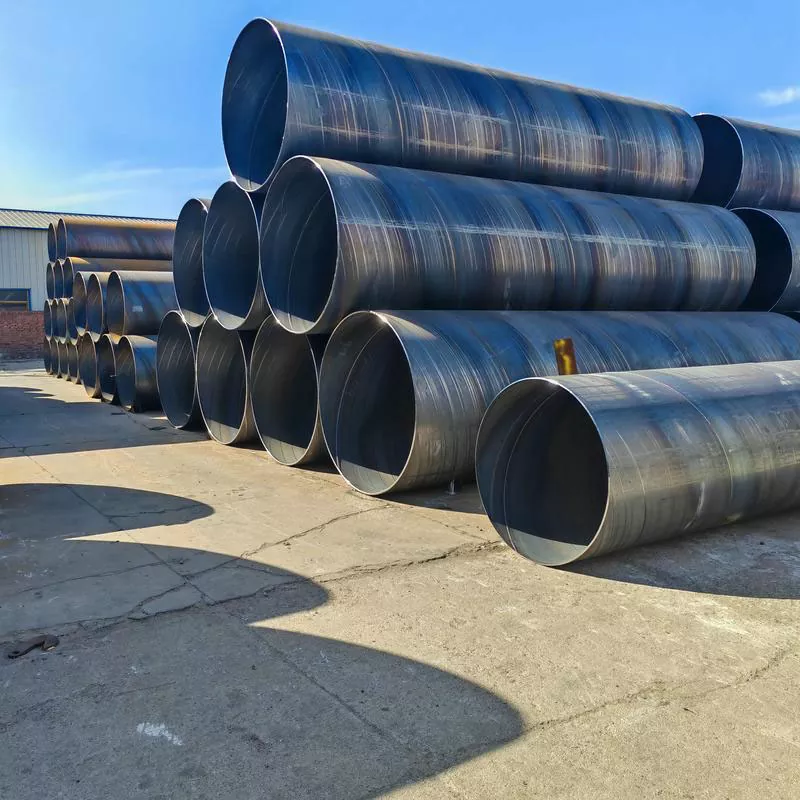
Table of Contents
- What Is a Spirally Welded Steel Pipe?
- Manufacturing Process of Spirally Welded Steel Pipe
- Key Advantages of Spirally Welded Steel Pipes
- Major Applications in Oil, Gas, and Water Transmission
- Standards and Specifications
- Comparison with Other Steel Pipes
- How to Choose the Right Spirally Welded Steel Pipe
- Why Choose a Reliable Manufacturer
- Frequently Asked Questions (FAQ)
1. What Is a Spirally Welded Steel Pipe?
A spirally welded steel pipe, also known as a helical welded steel pipe, is manufactured by rolling steel strip or coil into a cylindrical shape and welding the seam in a spiral (helical) direction. Unlike longitudinally welded pipes, the weld seam forms a continuous spiral around the pipe body.
This structural design allows the pipe to better distribute internal pressure and external stress, making it especially suitable for long-distance fluid transmission systems. Spirally welded steel pipes are commonly used in:
- Oil and gas pipelines
- Water supply and drainage systems
- Bridge piling and foundation engineering
- Marine and offshore projects
2. Manufacturing Process of Spirally Welded Steel Pipe
The production of spirally welded steel pipes involves advanced automation and strict quality control. Below is a simplified step-by-step process:
- Raw Material Selection: High-quality steel coils are selected based on required standards.
- Uncoiling and Leveling: The steel coil is flattened and prepared for forming.
- Spiral Forming: The steel strip is formed into a pipe at a specific helix angle.
- Welding: Both internal and external welding are performed, commonly using SAW (Submerged Arc Welding).
- Non-Destructive Testing: Ultrasonic or X-ray inspection ensures weld integrity.
- Hydrostatic Testing: Pipes are pressure-tested for safety.
- Surface Treatment: Anti-corrosion coatings such as 3LPE or FBE are applied.
| Process Step | Purpose |
|---|---|
| Spiral Forming | Ensures uniform stress distribution |
| SAW Welding | Provides deep penetration and strong welds |
| Hydro Test | Verifies pressure resistance |
3. Key Advantages of Spirally Welded Steel Pipes
- High Structural Strength: Spiral seams reduce stress concentration.
- Flexible Diameter Production: Different diameters can be produced from the same steel coil.
- Cost Efficiency: Lower material waste and manufacturing costs.
- Excellent Pressure Resistance: Ideal for high-pressure transmission.
- Wide Availability: Suitable for large-scale and long-distance projects.
4. Major Applications in Oil, Gas, and Water Transmission
Spirally welded steel pipes are widely adopted in critical infrastructure projects due to their mechanical reliability and economic benefits.
- Oil & Gas Pipelines: Long-distance crude oil and natural gas transportation.
- Water Transmission: Municipal water supply, desalination plants.
- Sewage Systems: Large-diameter wastewater pipelines.
- Structural Engineering: Piling, bridges, and high-rise foundations.
Many global EPC contractors prefer spirally welded steel pipes sourced from trusted manufacturers like Tianjin Xinlida due to consistent quality and compliance with international standards.
5. Standards and Specifications
| Standard | Application |
|---|---|
| API 5L | Oil and gas transmission |
| ASTM A252 | Piling pipes |
| EN 10219 | Structural applications |
| GB/T 9711 | Chinese national pipeline standard |
6. Comparison with Other Steel Pipes
| Type | Strength | Cost | Typical Use |
|---|---|---|---|
| Spirally Welded | High | Medium | Long-distance pipelines |
| LSAW | Very High | High | High-pressure pipelines |
| Seamless | Very High | Very High | Critical high-pressure systems |
7. How to Choose the Right Spirally Welded Steel Pipe
- Define operating pressure and temperature
- Confirm applicable standards and certifications
- Select appropriate coating for corrosion protection
- Evaluate manufacturer production capacity and QC systems
8. Why Choose a Reliable Manufacturer
Choosing a reputable supplier such as Tianjin Xinlida ensures stable quality, on-time delivery, and technical support throughout the project lifecycle. Experienced manufacturers also provide customized solutions for diameter, thickness, and coating systems.
Frequently Asked Questions (FAQ)
Q1: Are spirally welded steel pipes suitable for high-pressure applications?
Yes, when manufactured according to API 5L and properly tested, they perform reliably in high-pressure systems.
Q2: How long is the service life of a spirally welded steel pipe?
With proper coating and maintenance, the service life can exceed 30–50 years.
Q3: Can spirally welded pipes be customized?
Absolutely. Diameter, wall thickness, length, and coating can all be customized.
Q4: Are spirally welded steel pipes environmentally friendly?
Yes. Efficient material usage and recyclability make them a sustainable choice.
Conclusion
Spirally welded steel pipes have proven to be a reliable, cost-effective, and technically advanced solution for oil, gas, and water transmission projects worldwide. By understanding their manufacturing process, advantages, and standards, engineers and buyers can make informed decisions. If you are looking for a trusted supplier with global experience, Tianjin Xinlida is ready to support your project. Contact us today to get professional guidance and competitive solutions tailored to your needs.